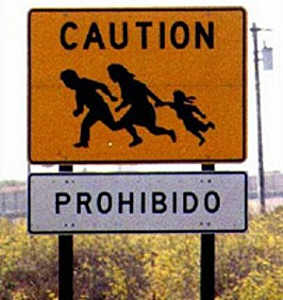
Today is the “March for America” immigration reform rally in Washington D.C. and it got me thinking (as a non-economist) about the economic effect of immigration on our country.
I was listening to Marketplace on Friday and heard this story of Sam, an undocumented immigrant who was brought to Indiana from Mexico when he was 4. Now he's in college--a jazz prodigy--but has come to realize that upon graduation, he won't be able to work.
Sam wants to stay in America--as he says, he grew up with Barney and Power Rangers just like we did. He's not a citizen and has had to hide that part of his life for years.
Sam might be forced to get a job that pays under the table because employers won't (or shouldn't) hire illegal immigrants.
The Congressional Budget Office found that 50 to 75 percent of undocumented immigrants pay federal, state and local taxes. And they contribute about $7 billion per year to Social Security.
Desperate to find work, countless undocumented workers in this country are paid less than the minimum wage—effectively putting millions of people into poverty so that we can reap the benefit of cheap labor.
Multiply that by millions of Sams, and that’s a big impact on the economy.
The cost of cheap labor is greater than the price—and when the market fails to right this inequality, government intervention must occur.
Chances are Sam won't live up to the earning potential that his college degree got him. Isn’t that why we all go to college in the first place? To help us become who we want to be--part of that, undoubtedly being making enough money to live our dreams and support our families?
It’s a heated debate, and I don’t want to get political. But there’s got to be a point where economics and humanity meet. And that’s where the right choice will be.
--Stephanie Hardiman

No comments:
Post a Comment